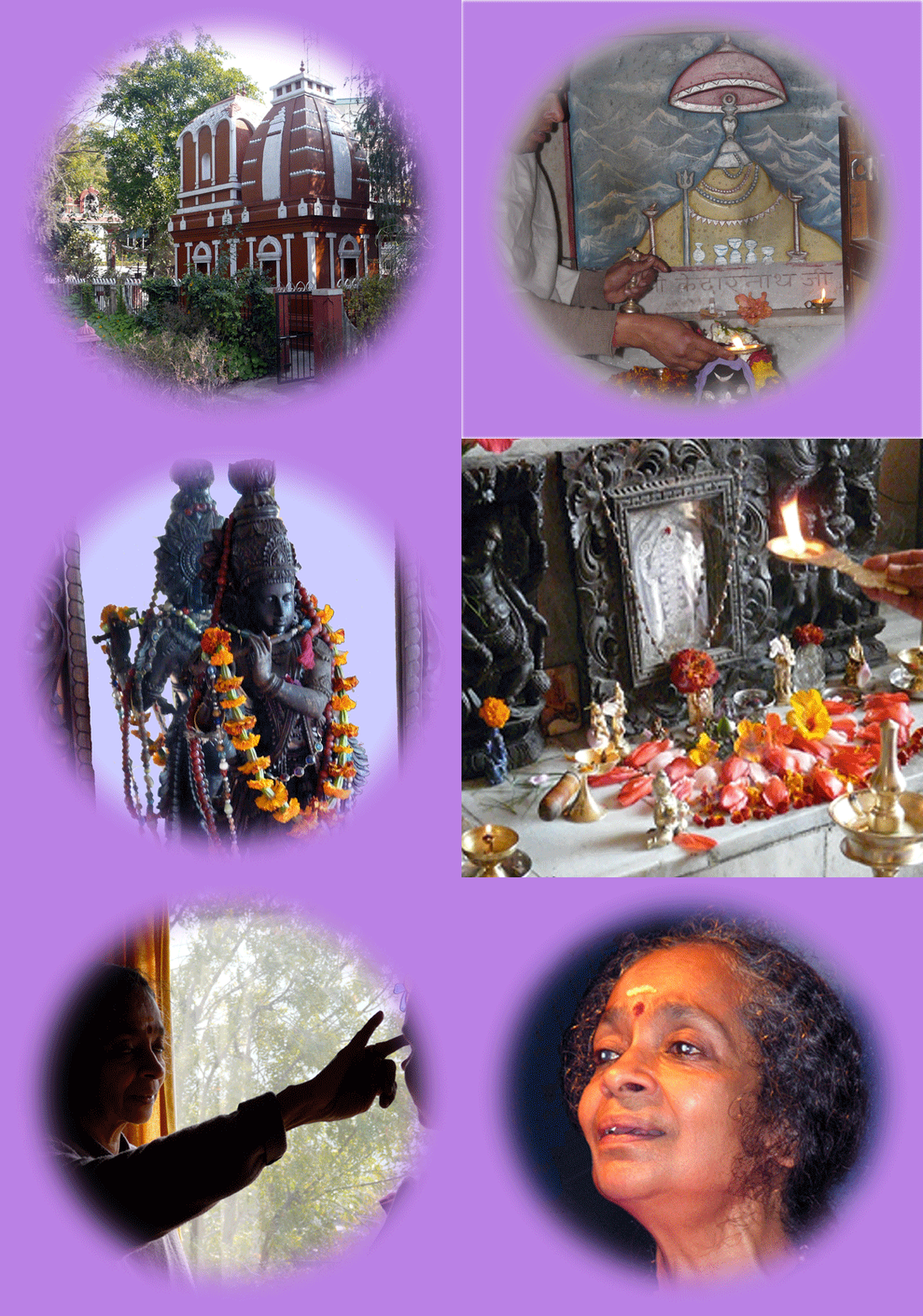
Devi Puja
Complete
course
information for
Retreat on the
Divine Mother
1. Retreat starts in
the morning with chanting and meditation.
To be chanted
before morning meditation.
Pratasmarami hridi
samsphuradatma tatwam
Sat chid sukham parama
hamsa gatim turiyam
Yad swapna jaagrita
sushuptimavaiti nityam
Tat Brahma
nishkalamaham na cha bhuta sangaha.
At break of dawn I
meditate within my heart on the Atman,
Which is of the nature
of existence, consciousness and bliss.
Ever liberated and in
the fourth state of consciousness,
Beyond the waking,
dreaming and deep sleep states,
That unsullied Brahman
am I and not a mere composition of the elements.
Bhadram karnethi
shrunuyama devaha,
Bhadram pasyeth
makshabhir ya jatraha
Sthirairangai
stushtuva sasthanubhi,
Vyashema devahitam
yadayuhu
Let my ears hear
nothing but that which is auspicious.
Let my eyes see
nothing but auspiciousness.
Let me be able to keep
good health and well being,
For the entire span of
life allotted to me by the gods,
So that I can extol
Thee without hindrance.
Poornamadah
poornamidam,
Poornath
poornamudachyathe,
Poornasya
Poornamaadaaya_
__Poornamevavashishyathe
“That is full, this is
also full,
From the full if you
take away the full,
What remains will also
be full”.
Samana mantra, samiti
samaani,
Samaanam saha
chittameshaam,
Samaani va ahuthi,
Samaanam hridayani vaha
Samanamasthu vo mano,
Yadavaha susahasati
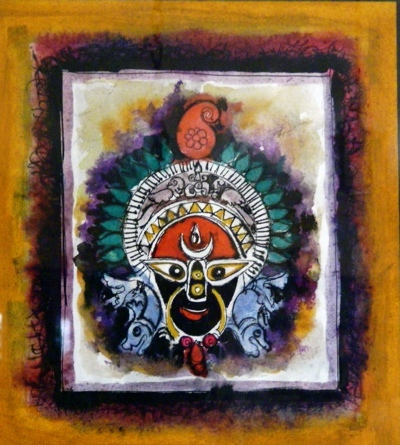
Kali
Ma
All mantras lead to
their respective gods and purify the mind of the
aspirant,
They take him to the
same goal which is Truth,
May our desires be
consonant with our thoughts
And may our actions
suit our words
May we be filled with
good thoughts,
May all round peace be
on everyone forever.
Isavasyamidam sarvam,
yad kinchijagtayam jagat,
Tena tyaktena
bhunjitha,
Ma gruda kasyavidhanam
Anything you can think
of in this creation is permeated by God alone.
Renounce and enjoy.
Do not covet another’s
wealth.
asato ma sad gamaya,
tamaso ma jyotir
gamaya,
mrityor ma amritam
gamaya
Lead me from the
unreal to the real,
From darkness to light
And from death to
immortality
_Shanti! Shanti!
Shantihi!
We end the meditation
with this mantra
Sarvesham swastir
bhavatu,
Sarvesham shantir
bhavatu,
Sarvesham poornam
bhavatu
Sarvesham mangalam
bhavatu
Let the whole world
enjoy good health,
Let the whole world
enjoy peace,
Let the whole world
enjoy prosperity.
Let the whole world be
filled with auspiciousness.
Sarve bhavantu
Sukhinaha
Sarve santu
niraamayaha,
Sarve bhadraani
pashyantu,
Ma kaschid dukkha
bhaav bhaveth
May everybody in the
world be happy.
May everybody be free
from disease.
Let us see only
auspiciousness everywhere
May nobody have sorrow.
Aum Shanti! Shanti!
Shantihi!
2 The next item is
yogasanas with particular emphasis on the Surya
namaskaram
Mantra to be chanted
before starting asanas and before any studies
“Saha naavavatu,
Saha nau
bhunaktu,
Saha veeryam
karavahai,
Tejasvinavadheetamastu,
Ma
vidvishavahai,”
May the Lord protect
us,
May we enjoy together,
May we work together,
May our studies be
thorough and fruitful,
May we never have
occasion to disagree with one another.
Before we start the
Surya Namaskaram (sun Salutation) we chant the
Surya Gayatri..
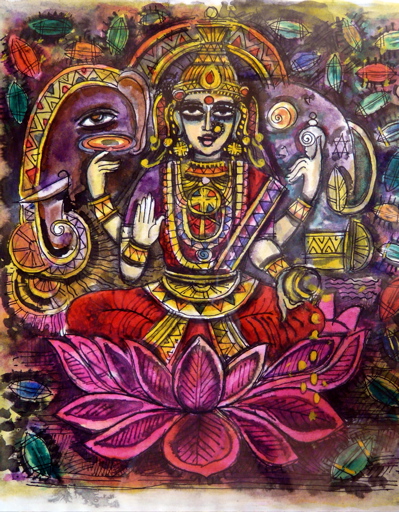
Surya Gayatri
Bhur Bhuvah Swaha,
_ Tat savitur
varenyam
Bhargo devasya
dheemahi,
Dhiyo yonah
prachodayath
Gayatri is said to be
the quintessence of the Vedas. Even though it
appears to be a hymn to the solar deity, its esoteric meaning is that
it gives us the knowledge of the oneness of the jivatman with the
Paramatman - that is the individual soul with the Supreme Soul.
Gayatri is also the
goddess of the meter in which the hymn is written.
She has been personified and extolled and can even be seen by those who
have the mystic vision. She is the bestower of all knowledge and has to
be worshipped regularly. Normally we face east and look at the rising
sun in the morning and towards the west in the evening.
“We meditate on that
light of the luminous God Savitur, who is well
known in the Vedas, who is the inspirer of all beings, their inner
Self, who is the creator of the universe. We mediate on that adorable
light which is the Self of the Supreme Lord of the universe, adored by
all as the sole object of worship. It is the giver of knowledge and
destroyer of ignorance. It is the light of the Supreme Brahman itself.
May that light enlighten us”.
Bhur, bhuvah, svaha!
Stands for the three worlds, earth, heaven and
inner space.
It also stands for
existence (bhur), consciousness (bhuvah), (bliss)
swaha SURYA NAMASKARA
Sun Salutation.
This consists of 12
steps, which exercise every part of the body. It is
a perfect asana by itself and should be practiced 12 times daily for
full benefit. It not only gives us strength and health of the body but
it also gives us a clear mind and good memory power. This is because
the sun is the source of both wisdom and health. There are 12 aspects
of the sun and that is why this is done 12 times. Each time we do one
round we invoke the sun with a special mantra. We also repeat the
Gayatri Mantra at the start of every posture.
Twelve Names of the Sun
1. Mitraaya Namaha! —
Salutations to the friend of the world.
2. Ravaye Namaha! —
Salutations to the one who is the eye of the world
3. Suryaaya Namaha! —
Salutations to the one who sucks and dries.
4. Bhaanave Namaha! —
Salutations to the one who is glowing and
effulgent.
5. Khagaaya Namaha! —
Salutations to the one who traverses the sky.
6. Pooshne Namaha! —
Salutations to the one who supports and nourishes
life.
7. Hiranyagarbhaaya
Namaha! – Salutations to the golden orb.
8. Mareechaye Namaha!
— Salutations to the grandson of the sage
Mareechi.
9. Adityaaya Namaha! —
Salutations to the son of Aditi.
10. Savitre Namaha! —
Salutations to the one who produces and sustains
life.
11. Arkaaya Namaha! —
Salutations to the ray of light.
12. Bhaskaraaya
Namaha! — Salutations to the one who radiates light.
First of all stand
straight with feet together, knees locked, palms
folded and pressed to your chest and meditate on the sun and repeat the
Gayatri mantra. Ask the sun God – Surya, to give you long life, perfect
health, perfect memory and liberation.
1. Take a deep breath.
Stand on your toes and raise your hands above
your head. Stretch to the maximum.
2. Exhale and bend
from the waist and touch your toes. Do not bend your
knees. If you can’t touch your toes, go as far as you can but don’t
bend your knees.
3. Inhale. Place both
palms on the ground beside your feet and stretch
your right leg straight back. Lift your whole body up on your palms and
throw your head back.
4. Hold your breath
and stretch your left leg also to the back. Your
body now is straight as a board. Keep your head straight and look
straight in front. From now onwards you should keep your hands and your
feet in the same position until the 11th posture. The body should move
between these two boundaries.
5. Exhale and go into
the rest posture or rabbit posture. Your arms are
stretched straight forward and your legs are bent at the knees and you
will be sitting on your haunches.
6. Inhale and lift
yourself up. Exhale and go into full prostration.
Your palms, forehead, chest, knees and feet should touch the ground.
Your bottom should be lifted off the ground.
7. Inhale and do the
reverse posture. Lift your body up by pressing
palms on the ground. Arch your back, throw your head back and look up.
8. Exhale and go into
the dog posture. Without moving your palms and
feet simply throw your head down and look down.
9. Inhale and exhale
and go into the rest posture, rabbit posture. Arms
are stretched straight forward and the body should go back and rest on
the haunches as in the 5th position.
10. Inhale and bring
your right foot forward and look up as in the 3rd
position.
11. Exhale and touch
your toes as in the 2nd position.
12. Inhale and come up
and keep your palms folded and pressed to your
chest.
These 12 postures
complete one round. It is good to do 12 rounds if you
can manage the time. First the right and then the left legs should be
used in the 3rd posture. From the fourth to the eleventh posture the
position of the hands and feet are fixed and should not be changed.
Mantras should be chanted in the order given above.
----------------------------------------
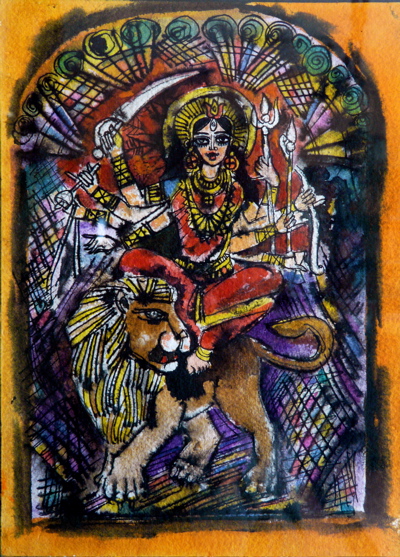
3.After the asanas we
have a short break for breakfast.
The following
mantras are to be chanted before all meals.
“Annapoorne sada
poorne,
Shankara praana
vallabhe,
Jnana vairagya
sidhyartam,
Bikshaam dehi cha
Parvati”
O Parvati! Thou
beloved of Shiva!
Thou art the ever
full, giver of food.
Give me the food of
knowledge and dispassion.
“Aham vaishwanaro
bhootwa, praninaam dehamashritaha,
Praanapaana
sama yukta, pachaamyannam chathurvidam”.
I am the vaishwanara
(fire of digestion) fire living in the bodies of
all creatures,
regulating the prana
and apana, (the ingoing and outgoing breaths)
I digest the four
types of food.
“Brahmarpanam,
Brahma havir,
Brahmagnau, Brahmana hutam
Brahmaiva tena gantavyam,
Brahma karma samadhinah”
Brahman is the
oblation. Brahman is the ghee and other offerings.
Brahman offers the oblation into the fire of Brahman. One who thus sees
Brahman in action all the time will undoubtedly reach Brahman alone.
4.
The next item on our
program is the puja to the goddess.
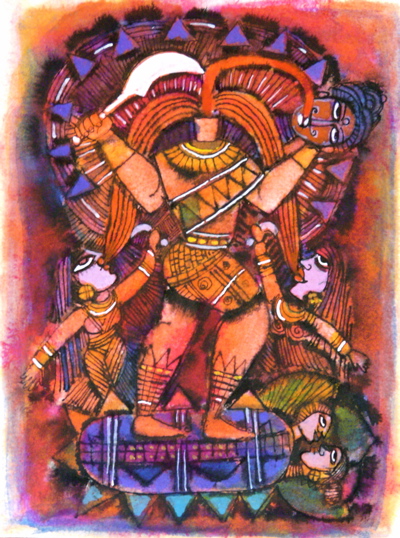
Puja
to the Devi.
Puja should be done
after a bath
or at least after
washing oneself.
An altar should be
prepared with a yantra
or an idol of the Devi
This altar should be
kept on the eastern or northeastern side so that
the devotee sits facing the east or north-east.
Items for puja should
be kept ready before starting.
A lamp and an incense
stick should be kept burning throughout the puja.
Flowers, clean water
in a vessel, fruit or some cooked food should also
be kept ready.
1. We look at the east
and repeat the Surya Gayatri mantra three times
and ask Savitri Devi to grant us concentration in our puja and
remembrance of the correct mantras.
2. We activate the
chakras by touching the points starting with the
sahasrara chakra on top of the head. We invoke the energy of the Devi
while doing this and chant her mantra at every point that we touch.
Aim Hreem Kleem
3. Next step is known
a “sankalpa”. This is our wish. The desire in us
that we want to be realized from this puja. We touch the plate with the
flowers; repeat our name and the name/s of anyone whom we want to
benefit from our puja and mentally reiterate our wish. It can be for
material benefits or for spiritual benefits.
4.Next we pray to
Ganesha to remove any obstacles on our spiritual path
and in the puja.
5. We touch the pot
containing water and invoke all the holy rivers
starting with Ganga to come into it.
6. Take a little of
this consecrated water either with a spoon or a
small conch and sprinkle it over yourself as well as the articles for
puja with the request that they may all be purified.
7. Then place the
palms of your hands over your heart and invoke the
atman inside you to come out and take the form of the goddess in front
of you. So actually you are really worshipping the atman itself when
you do the puja to any deity.
8. Sprinkle a few
drops of water on the altar with a prayer to all the
gods of the different directions and to the mother earth to allow you
to conduct this puja.
9. Now meditate on
your guru and repeat the guru mantra.
Guru Brahma guru
Vishnur,
Guru devo Maheshwara,
Guru saakshath param
Brahma,
Tasmai Sri Gurave
Namaha!
10.
Next we meditate and
invoke the Devi to come and take the seat in the
place prepared for her. She is the Shakti or divine energy, which
is motivating power inside us. Without her we would be inert and
senseless beings. Mentally we invite her to come and energize the
little idol, which we have kept before us in order to aid our
meditation.
Sarva mangala
mangalye, shive sarvarta sadhike,
Sharanye tryambake
Gouri,
Narayani namostute.
O Narayani! O
Protrectress!,
O Three-eyed Gauri
You are blessed with
every felicity, auspiciousness and capable of
accomplishing our every desire,
Praise be to you!
11. We place her on
the throne, which has been kept ready for her
(asanam)
12 We wash her feet
with a little of the water. (padyam)
13 Water is offered
for washing the hands and mouth (arghyam and
achamaniyam)
14.Then we put her on
the plate for a ceremonial bath known as
abhishekam.
As the water is poured
over her we repeat the Devi Gayatri three times
\ Mahalakshmyai cha
vidmahe,
Maha Shaktyai cha
dheemahi,
Tanno Devi prachodaayth
Abhishekam can be done
with different ingredients like, milk, honey.
After this the idol
should be wiped with a clean piece of cloth or
napkin and kept back on the seat.
15 Offer a flower to
her in place of a garment.(vastram)
16 Offer some unguent
or perfume (parimala dravyam)
17 Place some sandal
paste on the deity (gandham)
18 Then some kum kum
or red powder beloved by the goddess (kumkumam)
19 Offer some whole
grains of rice at the feet (akshadan)
20 Offer a flower
garland (mala)
21 Adorn her with all
types of jewellery. (All this is to be done
mentally)
22 She is the
cosmic Mother and we meditate on her blissful
countenance and worship her limb by limb. With each limb we repeat a
mantra and place a flower mentally on that particular limb at the
appropriate place. When you do this puja by yourself this can be done
using real flowers. Nine names of the goddess are repeated with each
flower
Aum Mahalakshmai
Namaha! I worship your feet. (place one flower
at her feet)
Aum Mahasaraswathyai
Namaha! I worship your knees.
Aum Maha Kaalyai
Namaha! I worship your shapely legs.
Aum Durgayai Namaha! I
worship your stomach, which holds many universes.
Aum Parvathyai Namaha!
I worship your chest.
Aum Chandikaayai
Namaha! I worship your slender waist
Aum Kartyayanyai
Namaha! I worship your beauteous breasts.
Aum Naarayanyai
Namaha! I worship your lotus eyes
Aum Maha Devyai
Namaha! I worship your whole body
With these nine
mantras I worship thy whole body O Mother Divine.
After this if time
permits we can chant the following seed mantra to
the three aspects of the Divine Mother as Saraswati, Lakshmi and Kaali.
We can repeat this mantra 108 times or as many times as we have time.
While repeating a mantra we can place one flower at her feel or the
petal of a flower
_Aim, Hreem,
Kleem
23. Next we offer
incense to the deity and sprinkle water and place a
flower at her feet (dhupam)
25 Then we wave the
lamp before her and sprinkle water and place a
flower at her feet (deepam)
26. Then we make some
food offerings. This can either be fruit or some
cooked food.(naivedyam)
We touch the plate
containing the food and repeat the Surya Gayatri
mantra and then we offer the five vital breaths within our body to her
with these mantras
Aum Pranaaya Swaaha!
Aum Apaanaaya Swaaha!
Aum Vyaanaaya Swaaha!
Aum Udaanaaya Swaaha!
Aum Samaanaaya Swaaha!
At the end of the
offering all things are once more offered to the
supreme Brahman to remind us that She is indeed Parabrahma Swarupini,
the form of the Brahman.
Aum Brahmane Namaha!
We close our eyes and
wait a while and beg her to partake of the food
that has been prepared so lovingly for her.
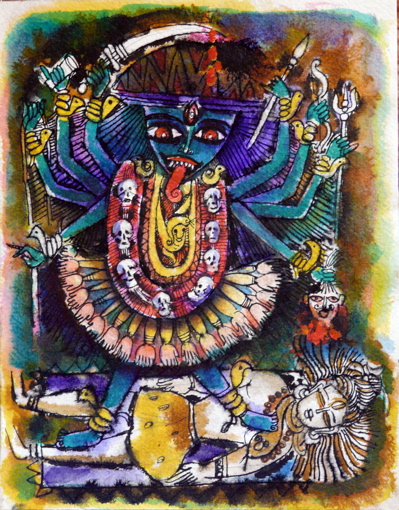
27. Now water is
offered for cleansing.
28. Next we offer
sweet smelling betel leaves to her
29. Then we do an
arati to her with these words,
Devi Maheswari
Parvati Shankari Sharanam me tava paada yugam.
O Devi your lotus feet
are my only recourse.
These 29 steps can be
done daily by those who wish to offer puja
to the goddess.
They won’t take
more than 15 minutes if you master
the different steps.
30. The next step can
be done on special occasions. Those who have the
time and opportunity may worship her by repeating the Lalitha
sahasranama or the thousand names of the goddess Lalitha which is the
most beautiful form of the Devi.
31.Then we repeat the
peace mantra for the good of the world so that
the benefits of our puja will spread to the whole world.
Aum Swasti prajabhyam,
paripaala yantaam,
Nyayena margena,
mahimahishah,
Go Brahmanebhyam
Shubamanstu nityam,
Lokaasamasata sukhino
bhavantu
May all people be
happy.
May kings rule the
earth righteously.
Let animals and men of
wisdom be taken care of.
May all be happy
Kaale varshatu
parjanyaha,
Prithivi
shashyashalini,
Deshoyam
kshobharahitaha,,
Sad janaath santu
nirbhayaaha.
May rains come at the
proper time.
May the earth produce
all types of grains,
May the country be
free from famine.
May good people be
free from fear.
Sarvesham swastir
bhavatu,
Sarvesham shantir
bhavatu,
Sarvesham poornam
bhavatu
Sarvesham mangalam
bhavatu
Let the whole world
enjoy good health,
Let the whole world
enjoy peace,
Let the whole world
enjoy prosperity.
Let the whole world be
filled with auspiciousness.
Sarve bhavantu
Sukhinaha
Sarve santu
niraamayaha,
Sarve bhadraani
pashyantu,
Ma kaschid dukkha bhav
bhaveth
May everybody in the
world be happy.
May everybody be free
from disease.
Let us see only
auspiciousness everywhere
May nobody have sorrow.
Aum Shanti! Shanti!
Shantihi!
Peace! Peace! Peace.
31 Take some flowers
in the cupped palms and repeat your wish from the
puja. “Yo pam pushpam veda..)
32 Finally we offer
the camphor arati and wave the camphor lamp in
front of her
Camphor is something
that burns without leaving any residue. Song to be
sung during the arati.
Karpoora gauram
karunavataaram,
Samsaarasaaram
bhujagendra haaram,
Sadaa vasantam
hridayaaravinde,
Bhavam bhavani sahitam
namaami
I bow to both Shiva
and Parvati,
Who is as white as
karpooram and wears a snake garland and is the
essence of the universe.
And who dwells ever in
my heart
Devi Maheswari Parvati
Shankari sharanam me tava sharanam yugam
O Devi, Parvati,
Maheswari, Shankari, we take refuge in you alone.
At the same time we
supplicate her to burn all our desires in this
flame and leave nothing behind
Water is offered once
more and a flower laid at her lotus feet
33. The final act of
the puja is to go round her and prostrate to her.
Since it might not be possible to go round the idol, we get up and turn
round at the same spot that we are standing and then do full
prostration repeating this mantra.
Yaani kaani cha
paapaani, Brahmahatya samaani cha,
Taani taani
vinashyanti, pradakshinam pade pade.
Whatever sin I might
have committed, even if it were the killing of a
Brahmin,
May it all be effaced
by going round and round you. (Circumambulating)
The following should be repeated while going round
Mantra heenam kriya
heenam bhakti heenam Sureshwara,
Yad pujitam maya deva
paripoornam tadastu te,
Aparaadha sahasraani
kriyante hanisham maya,
Dasyoham iti mam matwa,
Kshamaswa Parameswari.
As this is said we
prostrate ourselves full length on the floor with
this supplication
I beg of you to make
this puja of mine perfect
Despite the mistakes I
may have made in the chanting of the mantras,
And the accompanying
actions.
Consider me as thy
slave and forgive me O Parameshwari!
Akashaath patitam
thoyam, yada gachati saagaraath,
Sarva deva namaskaaram
Keshavam pratigachati
Just as all the water
that falls from the sky reaches the ocean,
So prostrations to any
god will reach the Supreme.
Avahanam na janaami,
na janaami visarjanam,
Puja vidhim na
janaami, kshamaswa Parameswari.
I have no idea how to
conduct a puja, how to invoke you or to revoke
you into myself. Pray forgive me for all this and make this puja
perfect.
With this mantra we
take a flower from the feet of the deity and invoke
the form back in to our heart from which we have taken her out.
This is the end of the
puja and the prasadam (food offerings) can be
distributed to all.
--------------------------------------------------------------------
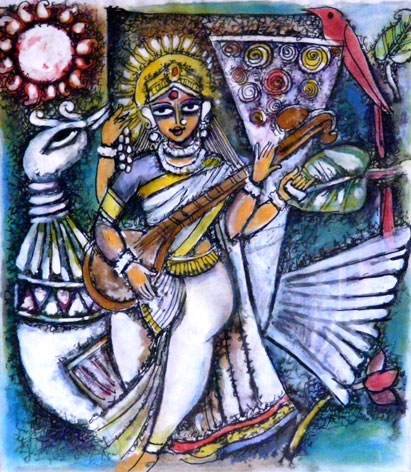
Mantras To the goddess
Saraswati
to be chanted before starting the discourse on the Devi.
“Saraswati
namastubhyam, varade kaamarupini,
Vidyarambham
karishyami,
Siddhir bhavathu me
sada”.
I humbly prostrate to
thee O Goddess Saraswati, who is the fulfiller of
all wishes.
I start my studies
with the request that Thou will bestow thy blessings
on me
To the Guru
“Gurur Brahma, Gurur
Vishnur, Gurur Devo Maheswara,
Guru sakshath param
Brahma,
Tasmai Sree gurave
namaha”!
I bow to that divine
Guru .
Who is none other than
Brahma, Vishnu and Shiva.
The Guru is verily
Brahman itself.
Next item is pranayama
and chanting of mantras.
We do ujjain and
watching the breath.
After this we have
lunch
Repeat the 3 mantras
for meals before lunch .
----------------------------------------------
Afternoon
question/answer period.
“Saha naavavatu,
Saha nau
bhunaktu,
Saha veeryam
karavahai,
Tejasvinavadheetamastu,
Ma
vidvishavahai,”
May the Lord protect
us,
May we enjoy together,
May we work together,
May our studies be
thorough and fruitful,
May we never have
occasion to disagree with one another
Mantras to be chanted
before evening meditation
Asangoham, asangoham,
asangoham punah punaha,
Satchidananda
swaroopoham,
Ahamevahamavyayaha.
Nitya shudha
vimuktoham, nirvikaroham avyayaha,
Bhoomananda
swaroopoham, ahamevahamavyayaha.
Nityoyam niravadyoyam,
niraakaroham achyuthaha,
Paramananda
swaroopoham, ahamevamahamavyayaha
Antar jyoti, bahir
jyoti, pratyak jyoti parathpara,
Jyoti jyoti, swayam
jyoti,
Atma jyoti shivosmyaham
Unattached,
unattached, unattached am I,
To the body, mind and
intellect
Existence,
consciousness and bliss am I.
I alone exist –
eternal, immutable.
Ever pure and free am
I, without change of form or nature,
Ever full. I alone
exist - eternal, immutable.
Eternal, without
boundaries, changeless and unshakeable,
The form of Supreme
bliss,
I alone exist -
eternal, immutable..
I am the effulgence,
which is both inside and outside,
The light that is
visible as well as transcendent.
Light of all lights,
the light of the self-effulgent atman
Filled with
auspiciousness am I
At the end of
meditation we repeat part of the peace mantra so that the
benefits we receive from meditation will spread to the whole world.
Sarvesham swastir
bhavatu,
Sarvesham shantir
bhavatu,
Sarvesham poornam
bhavatu
Sarvesham mangalam
bhavatu
Let the whole world
enjoy good health,
Let the whole world
enjoy peace,
Let the whole world
enjoy prosperity.
Let the whole world be
filled with auspiciousness.
Sarve bhavantu
Sukhinaha
Sarve santu
niraamayaha,
Sarve bhadraani
pashyantu,
Ma kaschid dukkha
bhaav bhaveth
May everybody in the
world be happy.
May everybody be free
from disease.
Let us see only
auspiciousness everywhere
May nobody have sorrow.
Aum Shanti! Shanti!
Shantihi!
The last program is
the chanting of bhajans and arati.
We have a special
number of Devi bhajans for this retreat as well as
our usual Krishna bhajans.
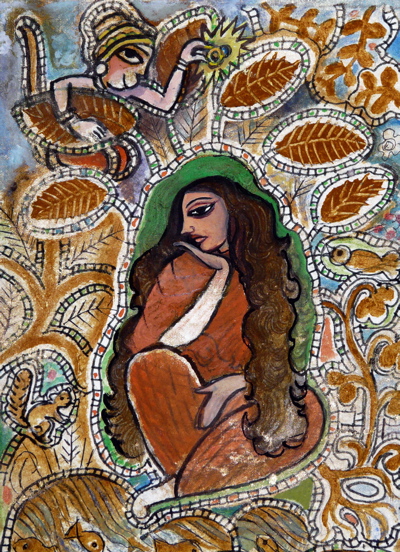
Bhajans on the
Divine Mother
1. Jai Ambe
Jagadambe Matru Bhavani Jai Ambe
Dukha Vinashini Durga Jai Jai,
Kaal Vinashini Kaali Jai Jai,
Uma
Rama Kaathyayani Jai Jai,
Radha Rugmini Sita Jai Jai.
Hail to thee O Mother
Bhavani
Mother of the universe,
Hail to Durga who
removes our sorrows,
Hail to Kaali who
effaces the ravages of Time,
Hail to Uma, Rema,
Kartyayani, Radha and Rugmini
2. Jagadodharini Mata
Durga, Jagadodharini Maa,
Jaya Jaga Janani, Jaya Jaga Janani,jaya Jaga Janani
Maa,
Jaya Gauri Devi , Rana Chandi Devi,
Jaya Shiva Ramana Jago Maa.
Awake and arise O
Mother,
Thou art the support
of the universe,
Hail to Gauri, hail to
Chandi
Hail to the delight of
Shiva.
Arise and awake O
Mother!
3. Aadi Divya Jyothi
Maha- Kali Maa Nama,
Madhu
Shumbha Mahisha Mardini, Maha Shakthaye Nama,
Brahma
Vishnu Shiva Swarupa twam na anyadaa,
Chara
Charasya Paalika, Namo Nama Sadaa.
I bow to the first
light – Maha Kaali,
The mighty slayer of
the demons – Madhu and Shumbha and Mahishasura
You are not different
from the gods, Brahma, Vishnu and Shiva,
You are the one who
takes care of the whole universe of movables and
unmovables,
To you I bow.
4. O Mayya , Sumayya,
ramayya, O Mayya,
Durga Mayya, Kaali Mayya, Parvati Mayya,
O
Mayya, sumayya, ramayya, O Mayya
Ganga Mayya, Gauri Mayya, Saraswati Mayya,
O
Mayya, sumayya, ramayya, O Mayya.
This bhajan just
repeats the different names of the goddess. Mayya
means mother
5. Ganga mayya, Ganga
mayya, Ganga mayya, Ganga mayya,
Ganga mayya punyavati,
paapanaashini bhagavati,
Gange Yamune
Bhageerati,
Alakananda Mandaakini,
Aum Namashivaaya
Shivaaya nama aum
Aum Namashivaaya
Shivaaya nama aum
Ganga jadhadara
Bhavani Shankara,
Kedaarnaatha namostute
(repeat)
Chorus Gange, Yamune…
Hari Naarayana
bhaja Naarayana, (repeat)
Shantaakaara Nara
Naaraayana,
Badrinaatha namostute
Chorus Gange, Yamune…
Ganga Mayya Ganga
Mayya
This is a bhajan on
the Mother Ganga, composed by Vanamali
It mentions all her
tributaries and the route she takes from the
Himalayas.
O Mother Ganga!
You are the immaculate
one capable of destroying the sins of all who
bathe in you.
Ganga, Yamuna,
Bhageerati , Alakananda, Mandakini.(names of the
tributaries)
I salute the Lord of
Kedar ( from which her tributary Mandakini comes)
Who holds the Ganga in
his locks
I salute Badrinatha,
the Lord of Badri (from which the Alakananda comes)
I salute the ever calm
and peaceful sages Nara and Narayana
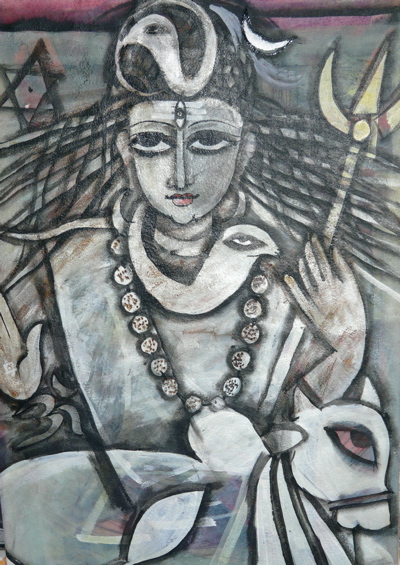
Evening Arati
Jaya
Jagadeesha Hare
Sa shanka chakram sa
kireeda kundalam,
Sa peetha vastram
sarasiruhekshanam,
Sa haara vaksha sthana
koustubham sriyam,
Namaami Vishnum
shirasa chaturbhujam
Aum Jaya jagadeesha
hare, Swami jaya jagadeesha hare,
Bhakta janonke
sankata, daasa janonke sankata,
Kshaname doora kare,
Aum Jaya jagadeesha
hare.
1. Jo dyavai phala
pawai, Dhukha vinase manaka,
Swami
dhuka vinase manaka,
Sukha sampati
kara awai, kashta mittai tanaka (Aum Jaya jagadeesha hare)
2 Mata pita tum mere
sharana kahun me kisakee,
Swami sharana. Kahun
me kisakee,
Tum bina aura na duja
(2)
Asha karun me jisakee.
(Aum jaya..)
3 Tum poornana
Paramatma, tum antarayami
Swami tum antarayami,
Paarabrahma
parameshwara (2)
Tum sabke swami (Aum
jaya…)
4 Tum karuna ke
sagara, tum palana karta,
Swami tum palana karta.
Me sewaka tum swami,(2)
Kripa karo bharta (Aum Jaya…)
5. Tum ho ek agochara,
sabake prana pati,
Swami sab ke prana pati,
Kise vidhi milun daya maya (2)
Me tumako kumati (Aum jaya…)
6. Deena bhandu dukkha
harta, tum rakshaka mere,
Swami tum rakshaka mere,
Apane hath uthao, (2)
sharana padam tere, (Aum jaya…)
7. Vishaya vikara
mittao, papa haro deva,
Swami paap haro deva,
Sraddha bhakti badao (2)
Santanaki sewa (Aum Jaya …)
8 Tan man dhan sab
tera,
Sab kuch hi tera
Swami sab kuch hi tera
Tera tujhuko arpana
Tera tujhuko arpana
Kya laaye mera (aum
jaya..)
Hail Master! Lord of
the Universe!
Who removes in a
moment the sorrows of his devotees
And the suffering of
the poor,
Glory to the Lord of
the universe!
1. The sorrows of one
who meditates on thee are removed,
He also gets the fruit
of contemplation,
Happiness and wealth
come to his home
And physical ailments
are removed.
2. I take refuge in
Thee who are both my mother and father,
O Lord! in whom else
can I take refuge
There is none other
than you in whom I can put my hopes,
Glory to the
Lord of the Universe.
3.
You are the perfect Soul Supreme,
Dweller in the
hearts of all,
You are both the
Supreme Lord and Master,
Lord of everyone’s
life,
Glory to the Lord of
the Universe.
4. O thou ocean of
compassion,
Nourisher of all
You are my master, I
am thy servant.
Grant me your grace,
glory to the Lord of
the universe.
5. You are the life
breath of everyone,
Way beyond the reach
of the mind and senses,
O gracious One! How
can I ever find you?
Glory to the Lord of
the universe.
6. Friend of the
distressed, destroyer of sorrow!
You alone can save me,
Extend thy helping
hand to me,.
Who am lying helpless
at thy threshold.
Glory to the Lord of
the universe.
7. Wipe out all my
worldly faults
Forgive my sins,
And increase my faith
and devotion,
And give me an
opportunity to serve the saints.
Aum Glory to the Lord
of the Universe.
8. My body, mind and
wealth belong to you,
Everything of mine
belongs to you,
I can only offer you
what is yours already,
What do I possess
which is my own?
Repeat Hail
Master! Lord of the universe
Aarati
Ramakrishna
Mukunda Madhava,
Vaasudeva Janardana,
Devaki sutha dehi me
tava
Pada bhaktim
achanchalam (repeat)
O Rama, Krishna,
Mukunda, Madhava, Vaasudeva, Janardana,(All names of
Krishna)
O son of Devaki! grant
that I may have unfaltering devotion to thy feet
Arati kunja vihari ki
Sri Giridara Krishna
muraree ki,
Gale me vyjayanthi
mala, Vanamala.
Bhajave murali madhura
bala, aha bala.
Nandaki nanda.
Sri ananda kanda
Mohana vriji chanda,
Radhika ramana vihari
ki
Sri Giridara Krishna
muraree ki..(repeat)
I do arati to Lord
Krishna who sports in the thickets,
Wearing a garland of
wild flowers,
And playing his flute.
He is the darling of
Nanda,
A bundle of bliss,
The light of Vrindavan
And the delight of
Radha.
Bhajan for dancing,
Govinda Jai Jai,
Gopala Jai Jai
Radha ramana Hari
govinda Jai Jai (repeat) Hail to Govinda, the delight
of Radha.
Hari Aum Tat Sat
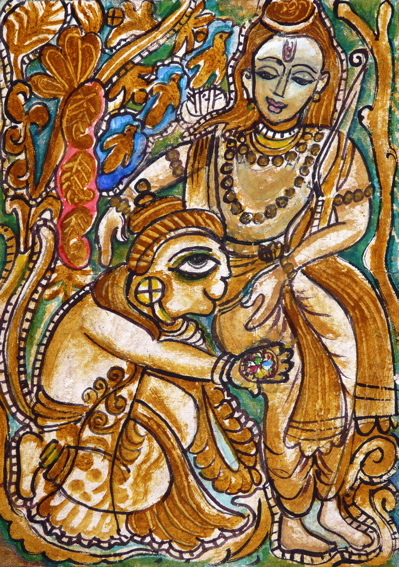
Vanamali
Bhajans
1. Ganesha sharanam,
sharanam Ganesha
Ganesha sharanam,
sharanam Ganesha,
Ganesha sharanam
sharanam Ganesha,
Ganesha sharanam
sharanam Ganesha (repeat)
2. He Nanda Nanda
Gopala,
Ananda Nanda Gopala,
He Nanda Nanda Gopala,
Ananda Nanda Gopala,
He Nanda Nanda, ananda
Nanda,
Yadu Nanda Nanda
Gopala.
3. Chitta chora
Yasodaki Baal
Navaneeta chora Gopaal,
Gopaal, Gopaal, Gopaal,
Go-vardhanadara Gopaal
4. Govinda Jai Jai,
Gopaala Jai Jai,
Radha ramana Hari, Govinda Jai Jai (repeat)
5. Jaya Naarayana Hari
Aum, Hari Aum, Hari Aum.
Bhaja Naarayana Hari
Aum Hari Aum Hari Aum.
Shantaakaara Bhujanga
shayana Padmanaabha Hari Aum
Jaya Naarayana, Hari
Aum, Hari Aum, Hari Aum….
6. Aum Namashivaya,
Aum Namashivaya, Aum Namashivaya nama Aum
Aum Namashivaya, Aum Maheswaraya, Aum
Sadashivaya Nama Aum
Shiva Aum, Shiva Aum, Shiva Aum, Shiva Aum.
Hara Aum, Hara Aum, Hara Aum, Hara Aum.
Bhava Aum, Bhava Aum, Bhava Aum, Bhava Aum
Aum Namashivaya ……
Aum Namashivaya,
Shivaaya nama Aum
Aum Namashivaaya,
Shivaaya nama Aum
Gangajadhadara,
Bhavaani Shankara,
Kedaarnaatha,
namosthute,
Chorus.
Hari Naarayana, Jaya
Naaraayana,
Hari Naaraayana, Jaya
Naaraayana,
Shaantakaara, Nara
Naaraayana,
Badrinaatha Namosthute
Chorus.
7. Radhe Radhe Radhe,
Radhe Govinda,
Radhe Radhe Radhe
Radhe Govinda
Radhe Radhe, Radhe,
Radhe Govinda,
Radhe Govinda,
Vrindavana Chanda (repeat)
8. To Thee who stole
the butter and milk,
To Thee who’s clad in
yellow silk,
To Thee I give my
salutation.
To Thee who danced on
Kaaliya’s hood,
To Thee, the cause of
evil and good,
To Thee I give my
salutations,
O Krishna! O Krishna!
O Krishna!
Thou Lord and God of
Vanamaali,
Thou savior of
Draupadi,
Thou Partha’s saarathy,
To thee I give my
salutation.
O Krishna O Krishna O
Krishna,
To thee only to Thee
To thee only to Thee
Do I give my
salutation,
My prostration,,
My salutation,
My prostration.
To thee to thee to thee
O Krishna O Krishna O
Krishna
This is a Vanamali
composition
9. Chilanka Ketti odi
odi vayo,
Ente Thamara Kanna adi
adi vayo,
Ninte Pinju Padam tedi
tedi nangal,
Ninde divya Namam
paadi paadi vannen.
Devaki nandana
Radha Jeevana, Keshava Hare Madhava,
Putana Vigraha, Papa
Vinasaka, Keshava Hare Madhava
Gokula Balane Odi
vayo, Gopala Balane OdVayo.
Kamsa Vimardana,
Kaliya Narttana, Keshava Hare Madhava,
Asrita Valsala, Aapat
Bandhava, Keshava Hare Madhava,
Omkara Nadame odi
vayo,Ananda Gitame odi vayo.
Pandava Rakshka Papa
Vinashaka, Keshava Hare Madhava,
Arjuna Rakshka, Ajnana
Nashaka, Keshava Hare Madhava,
Gitamritame odi vayo,
Hridayanandame odi vayo.
Hari
Aum Tat Sat
----------------------------------------------
Sree Lalitha
Sahasranamami
Dhyanam
Om
Sinduraruna vigraham tri nayanam manikya
mauli sphurat
Tara nayaka sekharam
smita mukhim apina vakshoruham
Panibhyam ali purna
ratna chashakam raktotpalam bibrathim
Saumyam ratna
ghatastha raktha charanam dhyayetparam ambikam.
Dhyayeth
padmasanastham vikasita vadanam padma patrayatakshim_Hemabham
pitavastrm kara kalita lasad hema padmam varangim_Sarvalankaran yuktam
satatamabhayatam bhakta namram bhavanim _Srividyam shantamurthim sakala
suranutham sarva sampat pradatrim.
Sakumkuma vilepanam
alika chumbi kasturikam
Samanda hasitekshanam
sasara chapa pasankusam
Asesha jana mohinim
aruna malya bhushambaram
Japa kusuma bhasuram
japavidhau smaredambikam.
Notes and Translation
Dear Devi bakthas, in
this part of the Sree Lalitha Sahasranamami
called as Dhyanam, Sree Lalithambika's beautiful image is pictured in a
detailed way. All those who chant Sree Lalitha Sahasranamam, should try
to picture (meditate) on her in this form in their mind, and then start
chanting the names.
Sree Lalithambika's
beautiful presence
can be described in
infinite ways.
Sinduraruna vigraham
tri nayanam manikya mauli sphurat
Tara nayaka sekharam
smita mukhim apina vakshoruham
Panibhyam ali purna
ratna chashakam raktotpalam bibrathim
Saumyam ratna
ghatastha raktha charanam dhyayetparamambikam.
I meditate on the
three-eyed Sree Lalithambika whose body is a glowing
vermilion color . She is sporting a crown studded with rubies with the
crescent moon on the side. Her face is lit up with a tender smile
showing her easy accessibility. Our pranams to Sree Lalithambika, who
holds a fund of inexhausible life for her children in her full and
splendid breasts. She holds a cup made of precious jewels and
filled with honey in one hand. In the other she holds fresh red lotuses
over which bees hover. They have come to drink the nectar. These two
hands symbolise joy and wisdom of which She alone is the source. Her
feet is placed on a precious pot full of valuable gems indicating that
nothing is difficult for those who surrender at Her feet and take
refuge in Her.
Arunam karuna
tharangithakshim _Drita pasankusha pushpa bhana
chapam_Animathi bhiravrutham mayookhai_Ahamithyeva vibhavaye bhavanim.
We meditate on the
Devi Bhavani, the great Empress who is light crimson
in colour, Whose eyes are full of compassion, Who has in Her hands the
noose, the goad, the bow and the flowery arrow and Who is surrounded on
all sides by the eight siddhis (powers), such as anima, mahima,
laghima, gharima, ishatwam, vashitwam, prapti, prakashyam. Sree Devi
Lalithambike. This form do I meditate within me.
Dhyaye padmasanastham
vikasita vadanam padma patrayatakshim
Hemabham pitavastram
kara kalita lasad hema padmam varangim
Sarvalankara yuktam
satatamabhayadam bhakta namram bhavanim
Srividyam santamurthim
sakala suranutham sarva sampat pradatrim.
I meditate on Sri Devi
Bhavani seated on a lotus, with face beaming
with joy, eyes soft and elongated like lotus petals, radiating a golden
aura, dressed in yellow silk, sporting a golden lotus in her hand,
perfect in every limb, profusely decorated, compassionate towards
devotees, and bestowing protection and all prosperity on them. Adored
by all celestials, she is the very embodiment of Sri Vidya and
Tranquility. She dispels fear and is the epitome of peace. Sree
Laltihambika gives every kind of wealth that is sought to her devotees.
Sakumkuma vilepanam
alika chumbi kasturikam
Samanda hasitekshanam
sasara chapa pasankusam
Asesha jana mohinim
aruna malya bhushambaram
Japa kusuma bhasuram
japavidhau smaredambikam.
I meditate on Sree
Lalithambika, whose body is anointed all over with
vermilion and musk that attracts the bees, whose glance is like a
loving smile, who holds in her hand the bow, the
arrow, the noose and
the goad, who bewitches everyone without exception, who is adorned with
red garlands and ornaments and who shines with the hue of the China
rose.
Namam 1-50
The Lalitha Sahasranama is a sequel
to
the Lalithopakhyana which forms part of the Brahmanda Purana. It
consists of three chapters, 14 sections and comprises of 365 lines. The
first is only introductory, the second gives the thousand names of the
great Goddess Lalita and the third contains the phalastuti.
Namams are given in
mantra form with their meanings.
The stotram form
follows each set of mantras.
1. Om Sree Maatre
Namah
Salutations to the
Divine mother who is the mother of all. When a new
born baby comes out from mother's womb into this world, the first word
he/she cries or utters is the word `Amma'. Indian Hindu shastras give
great importance to women and significant importance to mother. With
great devotion, the supreme God, Mother or Maatha, as known, is
worshipped in different forms. She is considered as the Goddess of
Education (Saraswati), Goddess of Wealth (Lakshmi), Goddess of Power
(Sakthi) or in other various forms such as Durga, Parasakthi etc. These
names of Goddess are chanted by adding `Sree' in front (Sree Lakshmi,
Sree Durga). Thus we bow Goddess Lalithambika, the supreme mother of
the universe and seek her blessings.
2. Om Sree
Maharajnyai Namah
In this form the
divine mother is considered the great Empress of the
whole Universe. She is omnipresent and the greatest administrator in
this universe. She is there to take care of everyone who
unconditionally surrender to her and also others who doubts about her
abilities and wander around with their worldly problems and sorrows.
3. Om Sreemat
Simhasaneswaryai Namah
Our pranams to the
Great Goddess who is sitting on the lion's back.
`Simhasanam' is also supposed to be the greatest of the greatest throne
and Devi Lalithambika is seated there taking care of this universe.
Devi was in this form when she killed the cruel Mahishasura.
(Sri Mata-Sri Maha
Rajni-Srimat Simhasenesvari)
4. Om Cid agni kunda
sambhutayai namah
Our salutations to
the Goddess who came out of the fire of pure
consciousness. It is said that in order to kill Bhandasura, Goddess
Parasakthi came out from the fire created by the great rishis who
performed shakthi poojas and yagnas.
5. Om Devakaraya
Samudyatayai Namah
Our salutations to
Goddess Lalithambika who promotes the cause of
Divine forces. Goddess Lalithambika reincarnates in different forms to
the destruction of the evil and to promote the good. It is known that
she came to rescue the Gods from the cruel Bhandasura.
(Cid Agni Kunda
Sambhutai-Deva karya Saumudyata)
6. Om Udyad bhanu
sahasrabhayai Namah
Our salutations to
her who is radiant as a thousand suns rising
together.
7. Om Catur bahu
samanvitayai Namah
Our salutations to
Sree Lalithambika who is with four divine hands.
Incidentally, four has many significance in our mythology. There are
four sides - East, West, North, South. A house has mostly four pillars.
The creator of this universe Lord Brahma has got four faces. The yugas
are also divided into four namely Krita Yuga, Thretha Yuga, Dwapara
Yugaand Kali Yuga. Human life is also divided into four stages. The
vedas are also four namely Righ veda, Yajur vedah,Sama vedah and Adarva
vedah. Four 's significance can be elaborated in many other ways too.
Here Lalihambika is praised in the form with four divine hands which
can be extended to all sides and can at the same time protects and
blesses every one.
(Udyad Bhanu
Sahasrabha-Catur Bahu Samanvita)
8. Om Raga svarupa
pasadhyayai Namah
Our salutations to
Goddess Lalithambika who holds in her lower left
hand a noose representing the power of love. She unites each and every
creature in this universe with her magical noose and keeps them in love
and harmony. The expression `raga' here shows affinity or love and care
for one another. Even in animals likes lions who are supposed to be
cruel you can find this bhava or sign of love. Goddess Lalithambika
controls the universe with this magical power.
9. Om
Krodhakarankusojjvalayai Namah
Our Salutations to
Devi Lalithambika who is holding the flashing goad
(a type of spiked stick for driving cattles - which can also be used as
a weapon) of anger in Her lower right hand for restraining the evil
forces.
(Raga Svarupa
Pasadhya-Krodha Karankusojjvala)
10. Om Manorupekshu
Kodandayai Namah
Our salutations to
Devi Lalithambika who weilds in her upper left hand
a Sugarcane bow that stands for mind. Our mind is illustrated just like
a sugarcane which has a hard outer skin and full of sweetness in side.
11. Om Pancha
tanmatra sayakayai Namah
Our salutations to
Devi Lalithambika who holds five arrows representing
the five Tanmatras (subtle elements of life). These five Tanmatras are
shape, taste, smell, touch and sound and they are illustrated here as
the arrows coming out from the mind which is considered as bow here.
(Mano rupeksu
kodanda-Panca tanmatra sayaka)
12. Om Nijaruna
prabha pura majjad brahmanda mandalayai Namah
Our salutations to
Sree Lalithambika in the rosy splendour of whose
form the whole universe is bathed. When a Devi bhaktha sit for
meditation in the early morning he should meditate Devi in this form.
(Nijaruna prabhapura
majjad brahmanda mandala)
13. Om Campakasoka
punnaga saugandhika lasat kacayai Namah
Our salutations to
Sree Lalithambika whose shining locks of hair impart
their fragrance to flowers like Campaka, Asoka and Punnaga adorning
them.
(Campakasoka punnaga
saugandika lasat kaca)
14. Om Kuruvinda
mani sreni kanat kotira manditayai Namah
Our Salutations to
Sree Lalithambika whose crown is shining with rows
of Kuruvinda gems.
(Kuruvinda mani
sreni kanat kotira mandita)
15. Om astami
chandra vibhrajadalika sthala sobhithayai Namah
Our salutations to
Her whose forehead shines, arching like the crescent
moon of the eighth lunar digit (Astami).
(Astami candra
vibhraja dalika sthala sobhita)
16. Om Mukha chandra
kalankabha mriganabhi visesakayai Namah
Our salutations to
Sree Lalithambika whose moon-like face is
distinguished by the Kasturi Tilaka like the spot in the moon.
(Mukha candra
kalankabha mriganabhi visesaka)
17. Om Vadana smara
mangalya griha torana cillikayai Namah
Our salutations to
Sree Lalithambika whose face, the auspicious home of
Kama (Cupid), has eyebrows that resemble archways leading to that abode
of beauty.
(Vadanasmara
mangalya griha torana cillika)
18. Om Vakatra
lakshmi parivaha chalan minabha locanayai namah
Our salutations to
Sree Lalithambika whose eyes moves like fish in the
streams of beauty flowing from her face.
(Vaktra Lakshmi
parivaha calan minabha locana)
19. Om Nava campaka
pushpaba nasa danda virajitayai Namah
Our salutations to
Sree Lalithambika whose shapely nose is like a
fresh-blown Campaka bud.
(Nava campaka
pushpaba nasa danda virajita)
20. Om tara kanti
tiraskari nasabharana bhasurayai Namah
Our salutations to
Sree Lalithambika with a nasal oranament set with a
jewel that excels the brilliance of the planet Venus.
(Tara kanti
tiraskari nasabharana bhasura)
21. Om Kadamba
manjari klpta karnapura manoharayai Namah
Our salutations to
Sree Lalithambika who is radiant and charming with a
bunch of Kadamba flowers over her ears.
(Kadamba manjari
klipta karnapura manohara)
22. Om Tatanka
yugali bhuta tapanodupa mandalayai Namah
Our Salutations to
Sree Lalithambika who has been orbs of the sun and
the moon as Her pair of ear pendants.
(Tatanka yugalibhuta
tapanodupa mandala)
23. Om Padma raga
silaadarsa paribhavikapola bhuve Namah
Our salutations to
Sree Lalithambika whose cheeks are far fairer than
mirrors of ruby (which is also called Padmaraga).
(Padma raga
siladarsa parbhavi kapola bhuh)
24. Om Nava vidruma
bimba sri nyakkari radana cchadayai namah
Our salutations to
Sree Lalithambika whose lips outshine the redness of
fresh coral and bimba fruit.
(Nava vidruma bimba
sri nyakkari radana chada)
25. Om Suddha
vidhyankurakara dvija pankti dvayojjvalayai Namah
Our salutations to
Sree Lalithambika whose beauty is enhanced by her
rows of teeth that resemble the sprouting of pure knowledge (Suddha
Vidya or Sri Vidhya).
(Suddha
vidhyankurakara dvija pankti dvayojjvala)
26. Om Karpura
vitikamoda samakarsi digantarayai namah
Our salutations to
Sree Lalithambika, the fragrance of the camphor and
lime coated betel roll in whose mouth is spreading in all directions.
(Karpura vitikamoda
samakarsi digantara)
27. Om Nija sallapa
madhurya vinirbhartsita kacchapyai namah
Our salutations to
Sree Lalithambika whose speech is more melodious
than the Veena of Saraswati, who is also known as Kacchapi.
(Nija sallapa
madhurya vinirbharsita kacchapi)
28. Om Manda smita
prabha pura majjat kamesa manasayai namah
Our salutations to
Sree Lalithambika, the radiance of whose smile
inundates the mind of Kameswara, Her Consort.
(Manda smita prabha
pura majjat kamesa manasa)
29. Om Anakalita
sadrsya cibuka sri virajitayai namah
Our salutations to
Sree Lalitambika, whose chin is peerless in beauty.
(Anakali sadrsya
cibuka sri virajita)
30. Om Kameswara
baddha mangalya sutra sobhita kandharayai namah
Our salutations to
Sree Lalitambika whose neck is adorned with the
Mangalsutra (marriage thread) fastened thereon by Her consort Kameswara.
(Kamesvara baddha
mangalya sutra sobhita kandara)
31. Om Kanakangada
Keyura kamniya bhujanvitayai namah
Our salutations to
Sree Lalitambika whose beautiful arms are decked
with armlets and bracelets of gold.
(Kanakangada keyura
kamaniya bhujanvita)
32. Om Ratna
graiveya cintaka lola muktaphalan vitayai namah
Our salutations to
Sree Lalithambika who wears a gem - set necklace
having a big pearl as a pendant.
(Ratna graiveya
cintaka lola mukta phalamvita)
33. Om Kameswara
prema ratna mani pratipan stanyai namah
Our salutations to
Sree Lalitambika whose breasts form the price she
pays to Her Consort (Maheswara) in return for the gem of love He
bestows on Her.
(Kamesvara prema
ratna mani pratipana stani)
34. Om Nabhyalavala
romali lata phala kuca dvayyai namah
Our salutations to
Sree Lalitambika whose breasts look like fruits on
the creeper of the hair - line spreading upwards from the navel.
(Nabhyalavala romali
lata phula kuca dvayya)
35. Om Laksya roma
lata dharata samunneya madhyamayai namah
Our salutations to
Sree Lalithambika who has a waist so slender that it
can only be inferred as a base for the creeper of fine hair springing
from her naval upwards.
(Laksya roma lata
dharata samunneya madhyama)
36. Om Stana bhara
dalan madhya patta banda vali trayayai namah
Our salutations to
Sree Lalithambika whose waist, breaking under the
weight of Her breasts, gets a supporting belt in the three folds of Her
abdomen.
(Stana bhara dalan
madhya patta banda vali traya)
37. Om Arunaruna
kausumba vastra bhasvat kati tatyai namah
Our salutations to
Sree Lalithambika who wears a garment of deep red
round Her hip.
(Arunaruna kausumba
vastra bhasvat katitati)
38. Om Ratna
kinkinikaramya rasana dama bhusitayai namah
Our salutations to
Sree Lalithambika who is adorned with a girdle
having many bells set with precious stones.
(Ratna
kinkinikaramya rasana dama bhusita)
39. Om Kamesa jnata
saubhagya mardavoru dvayanvitayai namah
Our salutations to
Sree Lalitambika, the beauty and smoothness of whose
thighs are known only to Her consort, the Conqueror of Love (Kamesa).
(Kamesa jnata
saubhagya mardavoru dvayanvita)
40. Om manikya
mukutakara janu dvaya virajitayai namah
Our salutations to
Sree Lalitambika whose two knees are like crowns
shaped from the precious stone Manikya.
(manikya mukutakara
janu dvaya virajita)
41. Om indra gopa
pariksipta smara tunabha janghikayai namah
Our saltutations to
Sree Lalitambika whose calf-muscles resemble the
quiver of the god of love with bright glow-worm like decorations.
(indra gopa
pariksipta smara tunabha janghika)
42. Om Gudha
gulphayai namah
Our salutations to
Sree Lalitambikayai whose ankles are well filled and
therefore without protrusion.
43. Om Kurma prshta
jayisnu prapadanvitayai namah
Our salutations to
Sree Lalitambika, the arch of whose feet rivals the
shapeliness and beauty of the back of a tortoise.
(Gulda gupha kurma
prishta jayisnu prapadanvita)
44. Om Nakha didhiti
samchanna namajjana tamo gunayai namah
Our salutations to
Sree Lalitambika, the illuming splendour of whose
toe nails dispels the darkness of ignorance in the votaries prostrating
at Her feet.
(Nakha didhiti
samchanna namajjana tamo guna)
45. Om Pada dvaya
prabha jala parakrta saroruhayai namah
Our saltutations to
Sree Lalithambika whose feet defeat the lotus in
beauty.
(Pada dvaya prabha
jala parakrta saroruha)
46. Om Sinjana mani
manjirra mandita sripadambujayai namah
Our salutations to
Sree Lalithambika whose lotus feet are adorned with
tinkling anklets set with jewels.
(Sinjana mani
manjirra mandita sripadambuja)
47. Om Marali manda
gamanayai namah
Our salutations to
Sree Lalithambika whose gait is slow and gentle like
the swan's.
48. Om Mahalavanya
sevadhaye namah
Our salutations to
Sree Lalitambika who is a treasure house of Divine
beauty.
(Marali manda gamana
mahalavanya sevadhih)
49. Om Sarvarunayai
namah
Our salutations to
Sree Lalithambika who is rose-hued all over.
50. Om Anavadyangyai
namah
Our salutations to
Sree Lalithambika who is faultless in every limb.
51. Aum Sarva
bharana bhusita
(Sarvaruna
anavadyangi-sarva bharana bhusita)
Sree Lalitha
Sahasranama Stotram
(to be read on
Friday's)
Om Iem Hrim Shreem
Srematrenamah
Asyashrilalita
sahasranama stotra mahamantrasya, vashinyadi vagdevata
rushayah anushtup
chandaha shree lalita parameshari devata
shrimadvagbhava_kutetibijam madhyakuteti shaktih shaktinyasam
karanyasancha kuryat mama_shree lalita parameshari prasada sidhyardhe
jape viniyogah___DHYANAM_Sinduraruna vigragam, trinayanam, manikyamaoli
spharat_Taranayaka shekharam, smitamukhim, aapinavakshoruham_Panibhyam,
alipurnaratna chashakam, raktotpalam bibhratim_Saomyam ratna ghatasdha
raktacharanam dhyayetparamanbikam__Arunam karuna tarangitakshim_Dhruta
pashankusha pushpa banachapam_Animadibhi ravrutam mayukhai_Rahamityeva
vibhavaye, bhavanim__Dhyayetpadmasanasdham vikasita_Vadanam
padmapatrayatakshim_Hemabham pitavastram karakalita_Lasadhemapadmam
varangim_Sarvalankarayuktam satata mabhayadam_Bhaktanamram
bhavanim_Shree vidyam shantamurtim sakala
suranutam_Sarvasanpatpradatrim__Sakunkuma vilepana malikachunbi
sasturikam_Samandahasi tekshenam sasharachapa pashankusham_Asheshajana
mohini marunamalya bhushanbaram_Japakusuma bhasuram japavidhao
smaredanbikam__Sree-mata shree maha-ragyni
shreematsinha-saneshvaree_Chidagni kunda-sanbhuta deva-karya samudyata -
1_Udyadbanu
saha-srabha chatur-bahu saman-vita_Raga-svarupa
pashadya krodha-karanku-shojvala -
2__Mano-rupekshu
kodanda pancha tanmatra sayaka_Nijaruna prabha-pura
majabhramhanda mandala -
3__Chanpaka shoka
punnaga saogandhika lasatkacha_Kuruvinda mani shrenee
kanatkotira mandita -
4__Ashtami chandra
vibhraja dalikasdhala shobhita_Mukha-chandra
kalankabha mruga-nabhi visheshaka -
5__Vadanas-mara
mangalya gruhatorana chillika_Vaktra-lakshmi pari-vaha
chalan-minabha lochana -
6__Nava-chanpaka
pushpabha nasa-danda virajita_Tarakanti tiraskari
nasa-bharana bhasura -
7__Kadanba manjari
klupta karna-pura mano-hara_Tatanka yugali-bhuta
tapa-nodupa mandala -
8__Padma-raga
shila-darsha pari-bhavi kapolabhuh_Nava-vidruma
binbashree nyakkari radanachada -
9__Shudha
vidyankurakara dvijapankti dvayojvala_Karpura-vitikamoda
samakarsha digantara -
10__Nijasanlapa
madhurya vinirbhastitakachapi_Mandasmita prabhapura
majatkamesha manasa -
11__Anakalita
sadrusya chubuka shree virajita_Kamesha bada mangalya
sutra-shobhita kandhara -
12__Kanakangada
keyura kamaniya bhujanvita_Ratnagrai-veya chintakalola
mukta phalanvita -
13__Kameshvara
prema-ratna mani prati-panastani_Nabhyalavala romali
lata phala kuchadvaei -
14__Lakshya romalata
bharata samunneya madhyama_Stana-bhara dalanmadhya
patta-bandha-valitraya -
15__Arunaruna
kaostunbha vastra bhasvatkatitati_Ratna kinkinikaramya
rashanadama bhushita -
16__Kamesha-gynata
saobhagya marda-voru dvayanvita_Manikya makuta kara
janudvaya virajita -
17__Endra-gopa
parikshipta smaratunabha janghika_Guda-gulpha kurma
prushtajaeishnu prapadanvita -
18__Nakhadidhiti
sanchanna samajana tamoguna_Padadvaya prabhajala
parakruta saroruha -
19__Shinjanamani
mangira mandita shrepadanbuja_Marali mandagamana
maha-lavanya shevadhih -
20__Sarvaruna
navadyangi sarvabharana bhushita_Shiva-kameshvarankasdha
shiva svadhinavallabha -
21__Sumeru
shrunga-madhyasdha shreemannagara naeika_Chintamani
gruhantahsdha pancha bramga sanasdhita -
22__Mahapadmatavi
sansdha kadanba vanavasinee_Sudha sagara madhyasdha
kamakshi kamadaeinee -
23__Devarshigana
sanghata stuyamanatma-vaibhava_Bhandasura
vadhodyukta-shakti-sena samanvita -
24__Sanpatkari
samaruda sindhura vrajasevita_Asvarudadhishtitasva koti
bhiravruta -
25__Chakra-raja
radharudha sarva-yudha parishkruta_Geya-chakra
radha-ruda mantrini parisevita -
26__Kiri-chakra
radha-rudha dandanadha puraskruta_Jvalamalinikakshipta
mahni prakara madhyaga -
27__Bhandasainya
vadhodyukta shakti vikrama harshita_Nitya parakra
matopa nireekshana samutsaka -
28__Bhanda-putra
vadhodyukta balavikrama nandita_Mantrinyanba virachita
vishangavadhatoshita -
29__Vishukra
pranaharana varahi viryanandita_Kameshvara mukhaloka
kalpita shreganeshvara -
30__Maha-ganesha
nirbhinna vighnayantra
praharshita_Bhanda-surendra nirmukta shastra pratyastra varshini -
31__Karanguli
nakhotpanna narayana dashakrutih_Mahapashupatastragni
nirdagdha surasainika -
32__Kameshvarastra
nirdagda sabhandasura shunyaka_Bramhependra
mahendradi devasansdhutavaibhava -
33__Haranetragni
sandagdakama sanjivanaoshadhih_Shreemadvagbhavakutaika
svarupa mukhapankaja -
34__Kantadhah-kati
paryanta madhyakuta svarupinee_Shakti-kutaikatapanna
katyadhobhaga dharinee -
35__Mulamantratmika
mulakutatraya kalebara_Kulamrutaikarasika
kulasanketapaline -
36__Kulangana
lulantasdha kaolinee kulayogini_Akula samayantasdha
samayachara tatpara -
37__Muladharaika
nilaya bramhagrandhi vibhedini_Manipurantarudita
vishnugrandhi vibhedine -
38__Aagyna-chakrantaralasdha
rudra-grandhi vibhedini_Sahasraranbujaruda
sudhasarabhivarshinee -
39__Tatillata
samaruchi shatchakropari sansdhita_Mahashakti-kundalini
bisatantu taniyasi -
40__Bhavani
bhavanagamya bhavaranya kutarika_Bhadrapriya bhadra-murti
rbhakta-saobhagyadaeini -
41__Bhakta-praya
bhakta-gamya bhakti-vashya bhaya-paha_Shanbhavi
sharadaradhya sharvani sharmadaeini -
42__Shankari
shrikari sadhvi sarachandra nibhanana_Shatodari shantimati
niradhara niranjana -
43__Nirpepa nirmala
nitya nirakara nirakula_Nirguna nishkala shanta
nishkama nirupaplava -
44__Nityamukta
nirvikara nisprapancha nirashraya_Nitya-shudha
nitya-budha niravadya nirantara -
45__Nishkarana
nishkalanka nirupadhirnirishvara_Niraga ragamadhani
nirmada madanashini -
46__Nishchinta
nirahankara nirmoha mohanashinee_Nirmama mamatahantri
nishpapa papanashini -
47__Nishkrodha
krodhashamani nirlobha lobhanashini_Nisandhaya
sanshayaghni nirbhava bhavanashini -
48__Nirvikalpanirabadha
nirbheda bhedanashini_Nirnasha
mrutyumadhani nishkriya nishparigraha -
49__Nistula
nilachikura nirapaya niratyaya_Durlabha durgama durga
dukha-hantri sukhaprada -
50__Dushta-dura
duracharashamani doshavarjita_Sarvagyna sandrakaruna
samanadhika varjita -
51__Sarva-shaktimaei
sarvamangala sadgatiprada_Sarveshvari sarvamaei
sarvamantrasvarupini -
52__Sarva-yantratmika
sarvatantrarupa manonmani_Mahishvari mahadivi
mahalakshmi rmrudapriya -
53__Maharupa
mahapujya mahapataka nashini_Mahamaya magasatva
mahashaktirmaharatih -
54__Mahabhoga
mahaishvarya mahavirya
mahabala_Maha-bhudirmahasirdhirmahayogeshvareshvari -
55__Mahatantra
mahamantra mahayantra mahasana_Mahayaga kramaradya
mahabhairava pujita -
56__Maheshvara
mahakalpa mahatandava sakshini_Mahakamesha mahishi
mahatripurasundari -
57__Chatushashtyupacharadya
chatushashti kalamaei_Mahachatushashtikoti
yogini ganasevita -
58__Manuvidya
chandra vidya chandramandala madhyaga_Charu rupacharuhasa
charuchandra kaladhara -
59__Charachara
jagannadha chakraraja niketana_Parvati padmanayana
padmarga samaprabha -
60__Panchapretasanasina
panchabramha svarupini_Chinmaei paramananda
vigynanaghanarupini -
61__Dhyanadhyatru
dhyeyarupa dharmadharma vivarjita_Vishvarupa jagarini
svapanti taijasatmika -
62__Supta pragynatmika
turya sarvavasdhavivarjita_Prushtikartri
bramharupa goptri govindarupini -
63__Sanharini
rudrarupa tirodhanakarishvari_Sadashivanugrahada
panchakrutya parayana -
64__Bhanumandala
madhyasdha bhairavi bhagamalini_Padmasana bhagavati
padmanabha sahedari -
65__Unmesha
nimishotpanna vipanna bhuvanavalih_Sahasrashirshavadana
sahasrakshi sahasrapat -
66__Aabramhakitajanani
varvashrama vidhaeini_Nijagyna rupanigama
punyapunya phalaprada -
67__Shruti simanta
sirurikruta padabja dhulika_Sakalagama sandoha
shukti sanputa maoktika -
68__Purushardhaprada
purna bhogini bhuvaneshvari_Anbika nadi nidhana
paribramhendra sevita -
69__Narayani
nadarupa namarupa vivarjita_Hrinkari hrimati hrudya
heyopadeyavarjita -
70__Rajarajarchita
ragyni ramya rajivalochana_Ranjani ramani rasya
ranarkinkini mekhala -
71__Rama
rakenduvadana ratirupa ratipriya_Rakshakari rakshasaghni
rama ramanalanpata -
72__Kamya
kamakalarupa kadanba kusumapriya_Kalyani jagatikanda
karunarasasagara -
73__Kalavati kalalapa
kanta kadanbari priya_Varada vamanayana
varunimadavihvala -
74__Vishvadhika
vidavidya vindhyachala nivasini_Vidhatri
vidajanani vishnu maya vilasini -
75__Kshetra-svarupa
kshetreshi kshetrakshetragynapalini_Kshaya-vrudhi
vinirmukta kshetrapala smarchita
76__Vijaya vimala
vandya mandaru janavatsala_Vagvadini vamakeshi vahni
mandala vasini -
77__Bhaktimatkalpalatika
pashupasha vimochani_Sanhruta sheshapashanda
sadachara pravartika -
78__Tapatrayagni
santapta samahladana chandrika_Tatuni
tapasaradhya tanumadhya tamo-paha -
79__Chiti
statpadalakshyardha chidekarasa rupini_Svatyanandalavibhuta
bramhadyananda santatih -
80__Parapratyakchitirupa
pashyanti paradevata_Madhyama vaikharirupa
bhaktamanasa hansika -
81__Kameshari
prananadi krutagyna kamapujita_Shrungararasa
sanpurna jaya jalandharasdhita -
82__Odyana pita nilaya
nindu mandala vasini_Rahoyaga kramaradhya
rahastarpana tarpata -
83__Sadyah prasadini
vishvasakshini sakshivarjita_Shadanga devata yukta
shadgunya paripurita -
84__Nityaklinna
nirupama nirvana sukhadaeini_Nitya shodashika rupa
shree kantardha sharirini -
85__Prabhavati prabha
rupa prasidha parameshari_Mulaprakruti ravyakta
vyaktavyakta svarupini -
86__Vyapini
vividhakara vidya vidya svarupini_Mahakameshanayana
kumudahlada kaomudi -
87__Bhaktahardhatamobheda
bhanumadbanu santatih_Shivaduti shivaradhya
shivamurtishivankari -
88__Shivapriya
shivapara shishteshta shishta-pujita_Aprameya
svaprakasha manovachamagochara -
89__Chichakti
shchetanarupa jadashakti jadatmika_Gayatri vyahruti
sandhya dvijabrunda nishemita -
90__Tatvasana
tatvamaei panchakoshantarah sdhita_Nisima mahima
nitya-yaovana madashalini -
91__Madagharnita
raktakshi madapatala gandabhuh_Chandana drava
digdhangi chanpeya kusumapriya -
92__Kushala
komalakara kurukulla kuleshvari_Kulakundalaya
kaolamarga tatpara sevita -
93__Sumara
gananadhanba tushtih pushtirmati dhrutih_Shanti spastimati
mantirnandini vignanashini -
94__Tejovati trinayana
lolakshi kamarupini_Malini hansini mata
malayachala vasini -
95__Sumukhi
nalini subhru shobhana suranaeika_Karikanti kantimati
kshobhini sukshmarupini -
96__Vajreshvari
vamadevi vayovasdha vivarjita_Sideshvari sidhavidya
sidhamata yashasvini -
97__Vishudichakra
nilaya raktavarna trilochana_Khatvangadi praharana
vadanaika samanvita -
98__Payasanna priya
tvaksdha pashuloka bhayankari_Amrutadi mahashakti
sanvruta dakinishvari -
99__Anahatabjanilaya
shyamabha vadanadvaya_Danshtrojvalakshamaladi
dhara rudhira sansdhita -
100__Kalaratryadishaktyao-ghavruta
snigdhao-dana priya_Mahavirendra
varada rakinyanba svarupini -
101__Manipurabja
nilaya vadanatraya sanyuta_Vajradikayudhopeta
dayaryadibhiravruta -
102__Rakta-varna
mansanishta gudanna pritamanasa_Samsta bhakta sukhada
lakinyanba svarupini -
103__Svadhishtananbujagata
chaturvaktra manohara_Shuladyayudha sanpanna
pitavarna tigarvita -
104__Medhonishta
maduprita bandinyadi samanvita_Dadyannasakta hrudaya
kakini rupadharini -
105__Muladharanbujarudha
panchavaktrasdhi sanpdhita_Ankushadi praharana
varadadi nishevita -
106__Mudgaodanasaktachitta
sakinyanba svarupini_Aagynachakrabja nilaya
shuklavarna shadanana -
107__Majasansdha
hansavati mukhyashakti samanvita_Haridranai karasika
hakinirupa dharini -
108__Sahasradala
padmasdha sarvavarnopashobhita_Sarvayudhadharashukla
sansdhita sarvatomukhi -
109__Sarvaodana
pritachitta yakinyanba svarupini_Svahasvadha mati
rmedha shrutih smrutiranuttama -
110__Punyakirtih
punyalabhya punyashravana kirtana_Pulomajarchita
bandhamochani bandhuralaka -
111__Vimarsharupini
vidya viyadadi jagatprasuh_Sarvavyadhi prashamani
sarvamrutyu nivarini -
112__Agraganya
chintyarupa kalikalmashanashini_Katyayani
kalahantri kamalaksha nishevita -
113__Tanbulapuritamukhi
dadimikusumaprabha_Mrugashi mohini mudhya
mrudani mitrarupini -
114__Nityatrupta
bhaktanidhi rniyantri nikhileshvari_Maityradi
vasanalabhya mahapralayasakshini -
115__Parashaktih
paranishta pragynana ghanarupini_Madhvipanalasa matta
matrukavarna rupini -
116__Mahakailasa
nilaya mrunala mrududorlata_Mahaniya dayamurti
rmahasamrajyashalini -
117__Aatmavidya
mahavidya shreevidya kamasevita_Shree
shodashaksharividya trikuta kamakotika
-
118__Katakshakinkaribhuta kamala kotisevita_Shirasdhita chandranibha
phalasdhendra dhanuh prabha -
119__Hrudayasdha ravi
prakhya trikonantara dipika_Dakshayani
daityahantri dakshayagyna vinashini -
120__Darandolita
dirghakshi darahasojvalanmukhi_Gurumurtirgunanidhi
rgamata guhajanmabhuh -
121__Deveshi
dandanitisdha daharakasha rupini_Pratipanmukhyarakanta
tidhimandala pujita -
122__Kalatmika
kalanadha kavyalapa vinodini_Sachamara ramavani
savyadakshini sevita -
123__Aadishakti
rameyatma parama pavanakrutih_Anekakoti bramhanda
janani divyavigraha -
124__Klinkari kevala
guhyakaivalya padadaeini_Tripura trijagadvandya
trimurti stridasheshvari -
125__Tryakshari
divyagandhadya sindura tilakanchita_Uma shailendra
tanaya gaori gandharava sevita
-126__Vidhvagarbha
svarnagarbha varada
vagadhishvari_Dhyanagamyaparichedya gynanada gynanavigraha -
127__Sarvavedanta
sanvedya satyananda svarupini_Lopamudrarchita
lilaklupta bramhanda mandala -
128__Adrushyadrushyarahita
vigynatri vedyavarjita_Yogini yogada yogya
yoganandayugandhara -
129__Echashakti
gynashakti kriyashakti svarupini_Sarvadhara
supratishta sadasadrupadharini -
130__Ashtamurtirajajaitri
lokayatra vidhaeini_Ekakini bhumarupa
nirvaita dvaitavarjita -
131__Annada
vasudha vrudha bramhatmaikya svarupini_Bruhati
bramhani bhramhi bramhananda
132__Bhasharupa
bruhatsena bhavabhava vivarjita_Sukharadhya shubhakari
shobhana sulabhagatih -
133__Rajarajishvari
rajyadaeini rajyavallabha_Raja tkrupa rajapita
niveshitanija shrita -
134__Rajyalakshmih
koshanadha chaturanga baleshvari_Samrajyadaeini
satyasandha sagaramekhala -
135__Dikshita
daityashamani sarvaloka vashankari_Sarvardhadatri savitri
sachidananda rupini -
136__Deshakala
parichinna sarvaga sarvamohini_Sarsvati shastramaei
guhanba guhyarupini -
137__Sarvopadhivinirmukta
sadashiva pativrata_Sanpradayeshvari sadhvi
gurumandala rupini -
138__Kulottirna
bhagaradhya maya madhumatimahi_Gananba guhyakaradhya
komalangi gurupriya -
139__Svatantra
sarvatantreshi dakshanamurtirupini_Sanakadi samaradhya
shivagynana pradaeini -
140__Chitkala
nandakalika premarupa prinankari_Namaparayana prita
nandivida nateshvari -
141__Midhya
jagadadhishtana muktida muktirupini_Lasyapriya layakari
sajja ranbhadi vandita -
142__Bhavadava
sudhavrusthih paparanya davanala_Daorbhagya tula vatula
jaradhvanta raviprabha -
143__Bhagyabhi
chandrika bhakta chittakeki
ghanaghna_Rogaparvatadanbholi rmrutyudaru kutarika -
144__Mahishvari
mahakali mahagrasa hamashani_Aparna chanidika
chandamundasura nishudini -
145__Ksharakshatmika
sarvalikeshi vishadharini_Trivargadatri subhaga
tryanbaka trigunatmika -
146__Svargapavargada
shudha japapushpa nibhakrutih_Ojovati dyutidhara
yagynarupa priyavrata -
147__Duraradhya
duradhatsha patali kusumapriya_Hamati merunilaya
mandara kusumapriya -
148__Viraradhya
viradrupa viraja vishatomukhi_Pratyagrupa
parakasha pranada pranarupini -
149__Martanda
bairavaradhya mantrini nyastarajyadhuh_Tripureshi
jayatsena nistraigunya parapara -
150__Satyagynananandarupa
samarsya parayana_Kapardini kalamala
kamadhukamarupini -
151__Kalanidhih
kavyakala rasagyna rasashevadhih_Pushtapuratana pujya
pushkara pushkarekshana -
152__Paranjyotih
parandhamah paramanuh paratpara_Pashahasta pashahantri
paramantra vibhedini -
153__Murta murta
nityatrupta munimanasa hansika_Satyavrata satyarupa
sarvantaryamini sati -
154__Bramhani
bramhajanani bahurupa budharchita_Prasavitri
prachandagyna pratishta prakatakruti -
155__Praneshvari
pranadatri panchashatpritarupini_Vishrunkhala
viviktasdha viramata viyatprasuh -
156__Mukunda
muktinilaya mulavigraharupini_Bhavagyna bhavarogaghni
bhavachakra pravartini -
157__Chandasara
shastrasara mantrasara talodari_Udarakirti
rudhamavaibhava varnarupini -
158__Janmamrutyu
jaratapta janavishranti daeini_Sarvopanishadudghushta
shantyatita kalatmika -
159__Ganbhira
gaganantahsdha garvita ganalolupa_Kalpanarahita
kashtakanta kantardha vigraha -
160__Kartakarananirmukta
kamakeli tarangita_Kanatkanakatatanka
lilavigrahadharini -
161__Ajakshaya
vinirmukta mugdha kshipraprasadini_Antarmukha samaradhya
bahirmukha sudurlabha -
162__Traei
trivarganilaya trisdha tripuramalini_Niramaya niralanba
svatmarama sudhasrutih -
163__Sansara
pankanirmagna samudharana sandita_Yagyna priya
yagynakartri yajamana svarupini -
164__Dharmadhara
dhanadhyaksha dhanadhanya vivard
hini_Viprapriya
viprarupa vishvabhramanakarini -
165__Vishvagrasa
vidrumabha vaishnavi vishnuruini_Ayoniryoninilaya
kulasdha kularupini -
166__Viragoshtipriya
vira naishkarmya nadarupini_Vigynanakalana
kalyavidagdha vhaindavasana-
167__Tatvadhika
tatvamaei tatvamardha svarupini_Samagana priya
saomya sadashiva kutunbini -
168__Savyapasavyamargasdha
sarva padvi nivarini_Svasdha svabhavamadhura
dhira dhirasamarchita -
169__Chaitanyardhya
samaradhya chaitanya kusumapriya_Sadodita
sadatushta tarunadityapatala -
170__Dakshina
dakshinaradhya darasmera mukhanbuja_Kaolini kevala
narghya kaivalyapadadaeini -
171__Stotrapriya
stutimati shruti sanstuta vaibhava_Manasvini manavati
maheshi mangalakrutih -
172__Vishvamata
jagadhatri vishalakshi viragini_Pragalbha paramodara
paramoda manomaei -
173__Vyomakeshi
vimanasdha vajrini vamakeshvari_Panchayagyna priya
panchapreta manchadhishaeini -
174__Panchami
panchabhuteshi panchasankhyopacharini_Shashvati
shashvataishvarya sarmada shanbhumohini -
175__Dharadharsuta
dhanya dharmini dharmavardini_Lokatita gunatita
sarvatita shamatmika -
176__Bandhuka kusuma
prakhya balalila vinodini_Sumangali sukhakari
suveshadya suvasini -
177__Suvasinyarchana
prita shobhana shudhamanasa_Bindutarpana santushta
purvaja tripuranbika -
178__Dashamudra
samaradhya tripura shrivanshankari_Gynanamudra
gynanagamya gynanagyneya svarupini -
179__Yonimudra
trikhandeshi trigunanba trikonaga_Anaghadbhuta
charitra vanchitardha pradaeini -
180__Abhyasatishayagynata
shadadhvatita rupini_Avyajakarunamurti
ragynanadhvanta dipika -
181__Aabalagopavidita
sarvanullanghyashasana_Shrichakrarajanilaya
shrimatripurasundari -
182__Shri shiva
shivashaktyaikya rupini lalitanbika_Yvam shri
lalita devya namnam sahasrakam jaguh -
All of the original watercolors on this web page are by
Vanamali
Ashram's Artist in Residence, Sri Sahadevan.
|